
Navigating a sushi meal extends beyond simply choosing what to eat; it involves a set of cultural practices that enhance the dining experience and demonstrate respect for the cuisine, the chef, and fellow diners. For professionals in client-facing roles, or anyone seeking to make a positive impression in social or business settings, understanding these nuances is not merely about adherence to tradition, but about building rapport and avoiding inadvertent missteps. The goal is to appreciate the culinary artistry and the cultural context, ensuring a smooth and enjoyable interaction for all involved. Understanding these cultural practices that enhance the dining experience will help you navigate any sushi outing gracefully.
Approaching the Meal: Seating and Ordering
Upon entering a sushi restaurant, especially a traditional one, observe the seating arrangement. If available, sitting at the sushi bar offers an interactive experience with the chef, allowing for direct communication and often, the freshest preparations. When ordering, consider beginning with lighter fish before progressing to richer, fattier options. Many establishments offer an "omakase" option, which translates to "I leave it up to you." This choice signifies trust in the chef's expertise to select and prepare the day's best offerings, often resulting in a unique and memorable meal. When opting for omakase, avoid making specific requests unless you have dietary restrictions you must communicate politely at the outset. When ordering sushi at a restaurant, remember to start with lighter options before moving to richer ones.
Chopstick Etiquette and Handling
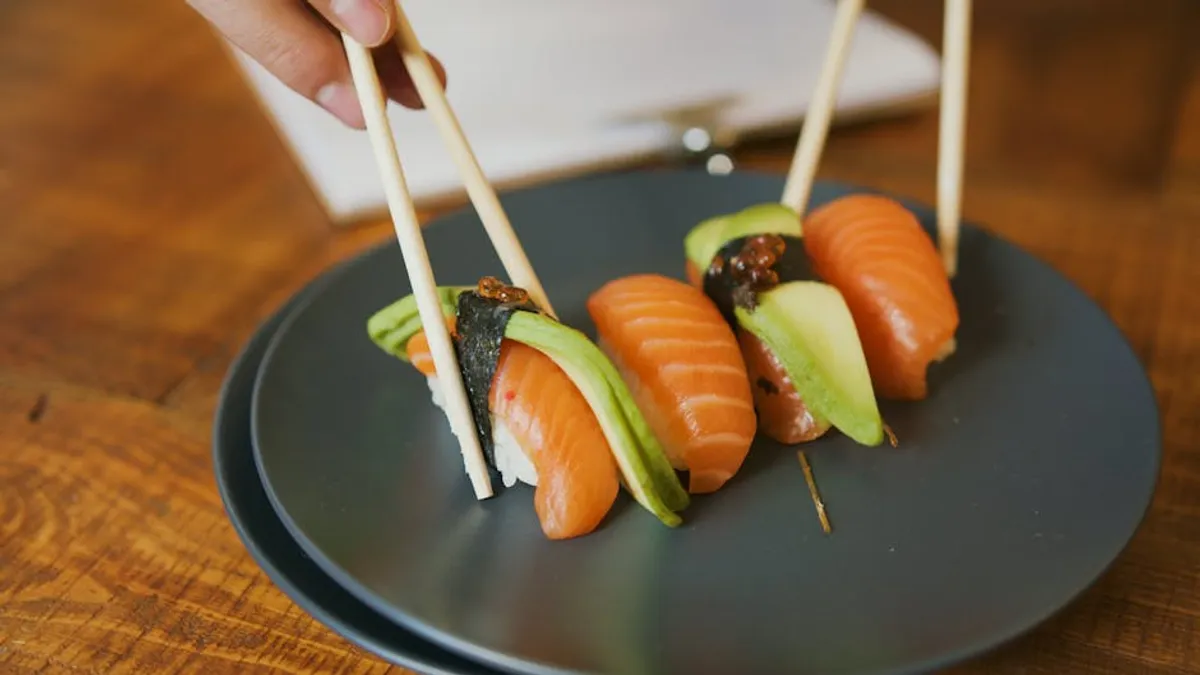
Chopsticks are the primary utensil for most sushi, though using your hands for nigiri is perfectly acceptable and often preferred. Proper chopstick technique involves holding the lower stick stationary against the base of your thumb and ring finger, while the upper stick moves like a lever, controlled by your thumb, index, and middle fingers. When not in use, place your chopsticks on the provided chopstick rest (hashioki) or across your soy sauce dish, never sticking them upright in your rice, which resembles an offering at a funeral altar and is considered highly disrespectful. Similarly, avoid using chopsticks to point at people or objects, or to pass food directly from one person's chopsticks to another's, as this practice is also associated with funeral rituals.
Warning: Never rub your chopsticks together after receiving them. This gesture implies that the chopsticks are cheap or poorly made and suggests a lack of respect for the establishment. Most quality sushi restaurants provide well-crafted, splinter-free chopsticks.
Soy Sauce, Wasabi, and Gari (Pickled Ginger) Usage
The use of condiments in sushi dining is often misunderstood. Soy sauce (shoyu) should be used sparingly. For nigiri (fish over rice), dip only the fish portion into the soy sauce, not the rice. Dipping the rice causes it to absorb too much soy sauce, overpowering the delicate flavors of the fish and potentially causing the rice to fall apart. A small amount of soy sauce is sufficient to complement the fish without dominating it. For sashimi, a slightly more generous dip is acceptable. Avoid drenching your sushi in soy sauce; the chef has already balanced the flavors.
Wasabi, the green horseradish paste, is typically applied by the chef directly to the nigiri between the fish and the rice. This ensures a balanced flavor profile. Adding extra wasabi is generally discouraged, as it can overwhelm the fish's natural taste. If you prefer more spice, apply a tiny amount directly to the fish, not mixed into the soy sauce. Gari, or pickled ginger, serves as a palate cleanser. Eat a small piece between different types of sushi to refresh your taste buds, allowing you to fully appreciate the distinct flavors of each new piece. It is not meant to be eaten on top of the sushi.
Eating Nigiri and Maki
Nigiri, the hand-pressed sushi, is traditionally eaten with your fingers. This allows for better control and helps maintain the integrity of the piece. When eating nigiri, turn it upside down so the fish makes direct contact with your tongue first. This delivers the full flavor of the fish immediately. Aim to eat nigiri in a single bite if possible. Maki, or sushi rolls, are typically eaten with chopsticks. They are designed to be consumed in one or two bites, depending on their size. Avoid taking multiple small bites from a single piece, as this can be messy and disrupt the experience.
Beverage Service and General Table Manners
When drinking sake or other beverages in a group, it is customary to pour for others and allow others to pour for you. Never fill your own glass; wait for someone else to offer. This practice fosters a sense of community and respect. If someone pours for you, hold your cup up slightly as a gesture of gratitude. Keep conversation at a moderate volume, especially at the sushi bar, to maintain a respectful atmosphere for other diners and the chef. Avoid excessive noise or boisterous behavior. The dining experience is meant to be a calm and appreciative one.
- Do not stack plates or bowls; allow the staff to clear them.
- Do not leave uneaten rice on your plate; it is considered wasteful.
- Do not use your phone excessively at the sushi bar; engage with the chef if appropriate.
- Do not ask for extra sauces or modifications once the sushi has been prepared, especially during omakase.
Enhancing Your Sushi Dining Experience
Mastering sushi etiquette is a practical skill that enhances your personal and professional interactions. It signals cultural awareness and respect, fostering positive relationships whether you are dining with clients, colleagues, or friends. By understanding the proper use of chopsticks, the subtle art of condiment application, and the traditional methods of eating, you demonstrate an appreciation for the culinary craft and the cultural heritage it represents. This attention to detail elevates the dining experience from a simple meal to an engaging cultural exchange, reflecting positively on your personal brand and social acumen.
Frequently Asked Questions
Is it acceptable to ask for a fork if I struggle with chopsticks?
While traditionalists prefer chopsticks or hands, most modern sushi restaurants understand and will provide a fork upon request, especially for non-Japanese diners. It is always better to ask politely than to struggle awkwardly.
Should I eat all the rice with my sushi?
Yes, the rice (shari) is an integral part of the sushi and is carefully seasoned by the chef. Leaving rice behind is considered wasteful and disrespectful to the chef's efforts.
Can I mix wasabi into my soy sauce?
While a common practice in some Western establishments, mixing wasabi directly into your soy sauce is generally frowned upon in traditional Japanese settings. It is perceived as crude and implies a distrust of the chef's seasoning.
How do I signal that I am finished with my meal?
Simply place your chopsticks back on their rest or across your soy sauce dish. There is no specific formal gesture required beyond this. The staff will observe when you are done.