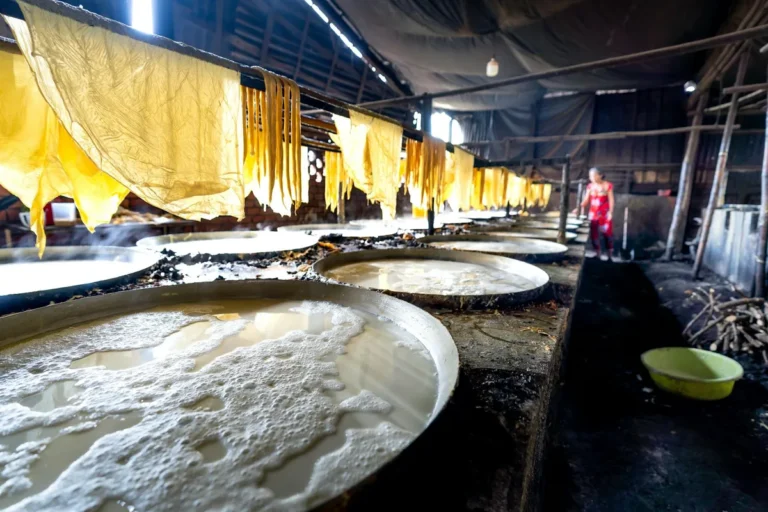
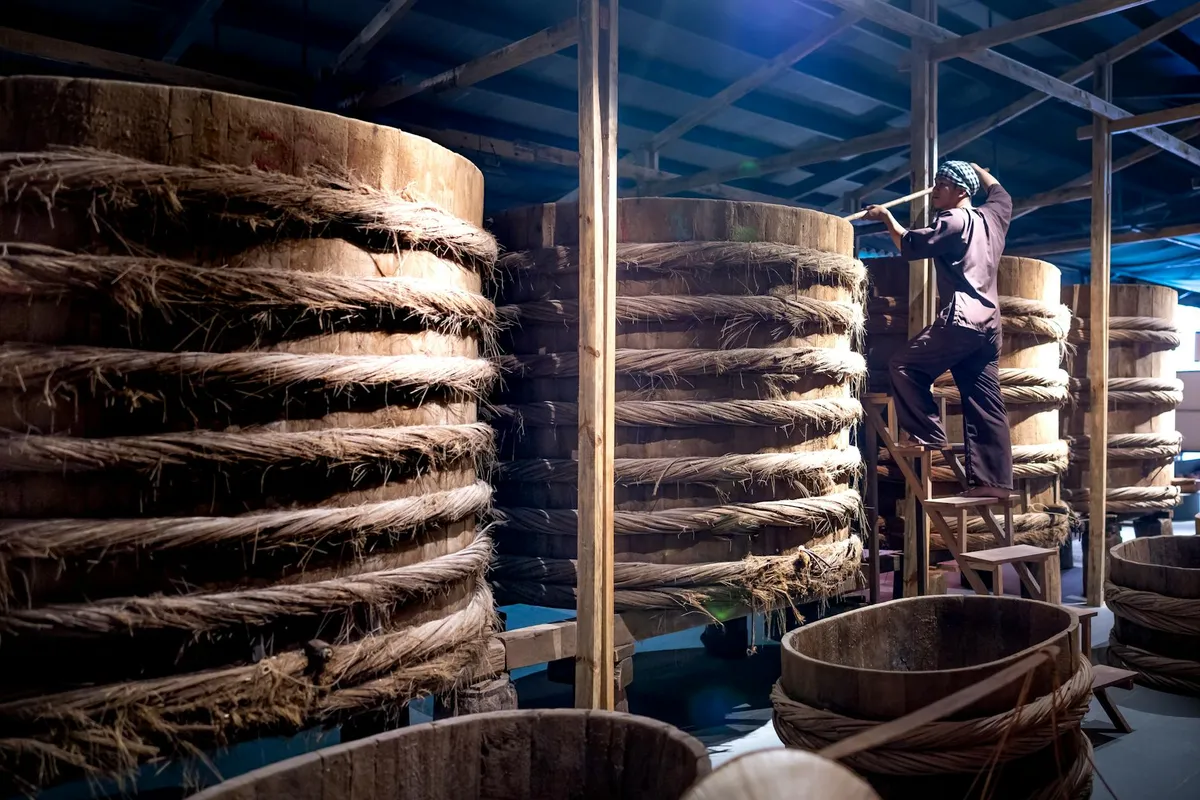
Japan once had thousands of small soy sauce producers. Each region had its specific producers making soy sauce in specific traditional methods. The flavor of soy sauce varied substantially across Japan, with each region producing distinctive products.
The number has declined to a few hundred small producers. The decline has been steady across the post-war period and continues. The remaining producers face increasing pressure from various directions.
The decline matters for what Japanese cuisine actually is. Soy sauce is foundational to Japanese cooking. The disappearance of regional variation in soy sauce represents a substantial loss in Japanese culinary diversity.
This essay examines the situation in detail because the situation deserves attention from people who care about Japanese food and food traditions more broadly.
What traditional soy sauce making is
Traditional soy sauce production involves specific methods:
Soybeans (or specific soybean varieties) are cooked.
Wheat is roasted and crushed.
The mixture is inoculated with koji (Aspergillus oryzae) and incubated for specific periods.
The koji-inoculated mixture is combined with brine (salt water) to make moromi.
The moromi ferments for extended periods (typically 6 months to several years) in wooden barrels.
The fermented liquid is pressed out and pasteurized.
The process produces soy sauce with substantial complexity from the long fermentation. Industrial methods produce soy sauce in days through chemical hydrolysis. The traditional methods produce dramatically different products.
The historical scale
Japanese soy sauce production was historically distributed:
Each region had its specific producers using specific methods.
Specific soybean and wheat varieties were used in different regions.
Specific water sources affected specific producer characteristics.
Specific seasonal patterns affected when fermentation happened.
The combination produced regional variation comparable to wine's terroir variation. Specific regions had identifiable soy sauce characteristics that differed from other regions' production.
The thousands of small producers represented substantial cultural and gastronomic diversity. The diversity is still partially preserved but substantially reduced from peak levels.
Why production has consolidated
Several factors have driven consolidation:
Industrial competition. Industrial soy sauce production produces consistent product at substantially lower prices. Many small producers cannot compete on price.
Distribution challenges. Modern food distribution favors large producers who can supply national markets. Small producers face distribution disadvantages.
Generational succession problems. Many small producers have generational succession problems. The work is demanding and economically marginal. Young people often choose other careers.
Regulatory burdens. Modern food safety regulations affect small producers disproportionately. The compliance costs are significant relative to small-producer scales.
Loss of regional supply chains. The supporting infrastructure (wooden barrel makers, specific soybean farmers, specific koji culture suppliers) has thinned. Loss of any element makes specific traditional production more difficult.
Aging customer base. The customers who valued traditional soy sauce flavor are aging. Younger customers often don't recognize the difference from industrial product.
The combination of factors has produced sustained consolidation across decades.
What's being lost
The consolidation has specific consequences:
Flavor diversity. Industrial soy sauce is consistent in ways that traditional regional production wasn't. Standardization has reduced the flavor diversity available in Japanese cooking.
Cultural memory. Specific traditions, specific knowledge, specific regional identities are tied to specific producers. Loss of producers reduces this cultural diversity.
Specific recipes. Some Japanese dishes were developed with specific regional soy sauces. Industrial substitution produces different results in those dishes.
Specific economic ecosystems. Small producers supported networks of related businesses (barrel makers, soybean farmers, etc.). Loss of producers cascades through these networks.
Educational opportunity. The traditional producers represent living cultural heritage that future generations could learn from. Their disappearance closes off this educational possibility.
Each loss is partial but the cumulative loss is substantial.
What remains
Despite consolidation, substantial small-producer presence continues:
Several hundred small producers continue to operate using traditional methods.
Specific regional traditions continue with reduced but substantial activity.
Specific producers have maintained their methods across decades despite economic pressure.
Some producers have adapted to maintain economic viability through specific direct sales, premium pricing, and tourism integration.
The remaining producers represent the contemporary state of traditional soy sauce production in Japan.
For people interested in traditional soy sauce, the remaining producers are accessible through specific channels.
Specific producers worth knowing
Several traditional producers warrant attention:
Marushichi Sato in Yamagata. Substantial producer maintaining specific traditional methods. Cedar barrel fermentation. Multi-year aging.
Yamasa Higeta Honten in Chiba. Long-established producer with specific tradition. Substantial scale relative to small producers but maintaining traditional methods.
Choshi Honjozo in Choshi. Coastal Chiba region producer with specific salt water tradition.
Specific Kyushu producers. Kyushu has substantial continuing soy sauce tradition with specific characteristics differing from main island production.
Specific Shodoshima producers. The small island in the Seto Inland Sea has remarkable concentration of traditional soy sauce makers.
Naming specific producers risks over-promotion. The interested can identify them through specialized resources and through visits to specific regions.
What buying traditional soy sauce supports
Buyers of traditional soy sauce support specific things:
The economic viability of traditional production methods.
The preservation of specific regional traditions.
The continuation of specific producer families and their accumulated knowledge.
The supporting ecosystem of related producers (soybean farmers, barrel makers, etc.).
The diversity of available Japanese cooking ingredients.
The cultural heritage represented by specific traditional production.
Each purchase is small individually. The cumulative effect supports the continued existence of traditional production.
How to identify traditional soy sauce
For buyers wanting traditional soy sauce rather than industrial:
Look for "honjozo" or specific traditional designations. These indicate fermentation-based production.
Look for substantial price premium. Traditional soy sauce costs $15-30+ per bottle. Cheaper soy sauce is industrial.
Look for specific producer names. Industrial soy sauce typically uses major brand names. Traditional soy sauce often features specific producer names.
Look for fermentation timeline information. Traditional producers often note fermentation periods (6 months, 2 years, etc.).
Look for ingredient simplicity. Traditional soy sauce ingredients should be soybeans, wheat, salt, water, and koji. Anything else suggests industrial product.
Buy from specialty retailers. Mass market retailers rarely carry traditional soy sauce. Specialty Japanese groceries or online specialists are the right sources.
The identification is not difficult once you know what to look for.
The broader pattern
Japanese small soy sauce production fits a broader pattern:
Specific traditional Japanese food producers have declined across categories. Miso, sake, vinegar, mirin, specific food crafts — all have similar consolidation patterns.
The pattern reflects broader economic dynamics affecting all small-scale food production globally.
Conscious consumer choice can support continued traditional production but cannot reverse the broader economic dynamics.
The specific cultural value of traditional production needs to be weighed against the convenience and affordability of industrial alternatives.
The choice is ongoing rather than concluded.
What restaurants can do
For Japanese restaurants and Japanese-influenced restaurants:
Use traditional soy sauce for dishes where it makes substantial difference.
Educate customers about the differences and the producers.
Maintain relationships with specific traditional producers.
Support producer events, educational opportunities, and consumer engagement.
The restaurant industry plays substantial role in traditional food preservation.
What governments and institutions can do
Government and institutional support could include:
Heritage designations for specific traditional production.
Educational support for next-generation traditional producers.
Tourism integration that benefits traditional producers economically.
Regulatory accommodations for traditional production methods.
Cultural recognition of traditional producers as cultural assets.
Specific examples of effective government support exist in other countries (France's AOC system, Italy's DOC/DOCG system, etc.). Japan has begun developing similar approaches but the development is incomplete.
What individual consumers can do
For individual consumers interested in supporting traditional production:
Buy traditional soy sauce when possible. Even occasional purchases support producers.
Visit traditional producers when traveling in Japan. The visit supports producers economically and educationally.
Engage with specialized retailers. The retailers maintaining traditional food access depend on continued customer engagement.
Cook with traditional soy sauce in dishes where it matters. Use the product rather than just owning it.
Share traditional soy sauce with others. Building broader awareness supports broader market.
Each individual action is small. Cumulative actions support continued production.
The cultural argument
The case for supporting traditional soy sauce production is substantial:
The traditional producers represent specific cultural heritage with substantial accumulated knowledge.
The flavor diversity they produce enriches Japanese cuisine.
The traditions cannot be recreated once lost. Reconstruction would lack the continuous heritage that makes the traditions what they are.
The producers are aging and the next generation often must choose between continuing tradition and pursuing other careers. Active support affects this choice.
The cultural value extends beyond utility. Traditional soy sauce production matters as cultural heritage even apart from product quality.
The argument is strong but requires sustained engagement rather than passive acknowledgment.
The honest realism
Honest acknowledgment of limits:
Some traditional production will continue to disappear despite preservation efforts.
Industrial soy sauce will continue to dominate Japanese and global markets.
Consumer behavior changes slowly. Mass adoption of traditional soy sauce isn't realistic.
Economic pressures will continue affecting traditional producers.
The realistic outcome is preservation of substantial reduced traditional production rather than restoration of historical scale.
Even reduced traditional production matters culturally if it continues at all.
A closing observation
Japan's small soy sauce producers continue, in reduced number, against substantial economic pressure. Their continuation depends on ongoing decisions by producers, consumers, restaurants, and institutions to value what could be lost.
For consumers, the choice between traditional and industrial soy sauce is ongoing. Each purchase is a small decision with cumulative implications.
For Japan, the soy sauce producers represent a specific instance of broader cultural preservation questions affecting traditional food production globally. The questions don't have clean answers.
For people who care about Japanese cuisine, the situation deserves awareness. The rich diversity of Japanese cooking depends partly on the substantial diversity of ingredients, including soy sauce variation that small producers maintain.
The barrels continue to ferment. The producers continue their work. The traditions persist, where they persist, because of decisions across many actors that the traditions remain worth maintaining.
The work goes on, in the long quiet rhythm by which traditional food production has always operated when conditions for it are sustained. The continuation matters substantially for what Japanese food remains and what it could lose.
The soy sauce continues. The traditions continue. The work of supporting them continues, where it continues, because some practitioners and consumers find substantial value in the kind of food production that operates on time scales much longer than industrial production allows.